Source Coffee Brewing Kettle for Outdoor Camping and Home Use
Explore 30 listings for the coffee brewing kettle, comparing stainless steel and aluminum options with capacities from 350ml to 2L. Buyers can evaluate features like eco-friendly designs, rotary structures, and various packing details to find suitable suppliers.
Key considerations
Products List


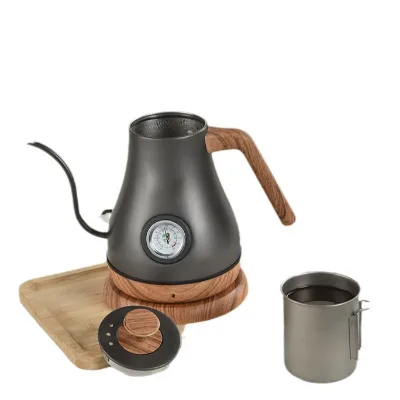


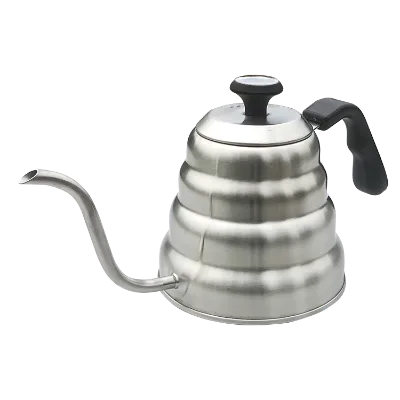


Comprehensive Sourcing Guide
Strategic Sourcing Guide for Coffee Brewing Kettles
Understanding Technical Specifications and Material Variations
When sourcing coffee brewing kettles, buyers must navigate a diverse landscape of technical specifications that directly influence brewing performance and durability. The product data indicates a significant variation in material composition, with listings explicitly identifying Stainless Steel, Aluminum, and general Metal constructions. Stainless Steel is often preferred for its corrosion resistance and ability to maintain consistent heat, while Aluminum offers a lighter profile, though it may require specific internal coatings to prevent reactivity with acidic coffee oils. The observed data also highlights specific model numbers such as KT-10, KT-9, and KJ240628-4, suggesting that buyers should not assume uniformity across different SKUs even within the same product category.
Volume capacity is another critical specification that varies widely in the market. The available data points to capacities ranging from specific standards like 350ml up to larger ranges of 1L-2L, with individual listings noting 1L and <1.2L capacities. This variance necessitates a clear definition of the target end-user; a 350ml kettle is suitable for single-serve precision brewing, whereas a 1L to 2L unit serves multiple cups or larger batch preparations. Furthermore, the physical dimensions are not standardized, with observed packaging sizes ranging from 38X22X18 cm to specific product standards of 18.5X13.5X19CM. Buyers must verify these dimensions against their logistics requirements, as the "Single package size" can significantly impact shipping costs and warehouse storage efficiency.
The structural design of the kettle also plays a pivotal role in functionality. Observations include "Straight Blade" and "Rotary Type" structures, which may refer to the internal mechanism of specific brewing aids or the spout design intended for pour-over control. The presence of a "Lid" is noted as a standard feature in several listings, which is essential for heat retention and preventing contamination. Additionally, the handle design is specified as a "Metal Handle with plastic coating," a detail that impacts user safety and comfort during high-temperature operations. The shape is predominantly described as "Round," aligning with traditional aesthetics, though "Customized" color options and "Modern" design styles are available to meet specific branding needs.
Compliance, Certification, and Safety Standards
Ensuring that coffee brewing kettles meet international safety and material standards is a non-negotiable aspect of B2B procurement. The provided data explicitly lists certifications such as CE/EU and LFGB. The CE marking indicates conformity with health, safety, and environmental protection standards for products sold within the European Economic Area, while LFGB is a German food safety law that is often stricter than general EU standards, covering materials that come into contact with food. Buyers must verify that the specific supplier provides valid, up-to-date certification documents for the exact model being ordered, as compliance can vary between production batches or different product lines.
Electrical safety is particularly relevant for electric variants of these kettles. The data mentions a voltage specification of 220V, which is standard for many international markets but requires verification against the destination country's grid frequency and voltage. If the target market operates on 110V, a 220V unit will be incompatible without a transformer, which introduces additional cost and safety risks. Furthermore, the "Eco-Friendly" attribute suggests that some models may incorporate energy-efficient heating elements or sustainable manufacturing practices, but this claim requires independent verification through energy consumption data or third-party environmental audits.
Material safety is equally critical. While the data lists "Stainless Steel" and "Aluminum," the specific grade of stainless steel (e.g., 304 vs. 316) is not explicitly detailed in the provided facts. Buyers should request material test reports to confirm the absence of harmful heavy metals and ensure the material is food-grade. The "Ceramic Type: Porcelain" and "Glass Type: Collins Glass" attributes found in related drinkware listings highlight the need to distinguish between metal kettles and glass/ceramic brewing vessels, as their thermal shock resistance and cleaning requirements differ significantly. For any product claiming to be "Eco-Friendly," buyers should ask for documentation regarding the recyclability of the packaging, which is noted as "Carton" or "Carton Box" in the data, and the "Color Box" options.
Cost Drivers and Pricing Dynamics
The pricing structure for coffee brewing kettles is influenced by a complex interplay of materials, customization, and order volume. The observed price range in the market spans from $1.39 to $7,090, a disparity that reflects the difference between basic manual brewing tools and high-end, automated, or luxury electric units. This wide range indicates that buyers must be extremely precise in their requirements to avoid overpaying for unnecessary features or under-specifying for critical performance needs. The lower end of the spectrum likely corresponds to simple stainless steel or aluminum kettles with minimal features, while the upper end may include advanced temperature control, smart connectivity, or premium branding.
Order Volume is a primary driver of unit cost. The Minimum Order Quantity (MOQ) data shows a range from 1 to 3,300 units. An MOQ of 1 suggests that some suppliers offer sample orders or drop-shipping capabilities, which is useful for market testing but often comes with a higher per-unit cost. Conversely, an MOQ of 3,300 implies a bulk manufacturing setup where economies of scale significantly reduce the unit price. A specific listing notes an MOQ of 99pcs, which serves as a middle ground for small to medium-sized retailers. Buyers should calculate the total landed cost, including shipping and duties, rather than focusing solely on the unit price, as high-volume orders may incur different logistics costs compared to small, consolidated shipments.
Customization is another significant cost factor. The data confirms that "Customization" is available, and "Color" options include "Black/White" as well as "Customized" choices. Customizing the color, adding a specific brand logo, or altering the packaging from a standard "Carton" to a branded "Color Box" will inevitably increase the unit cost and potentially extend the lead time. The "Design Style: Modern" and "Style: Warm Keeping" attributes suggest that aesthetic and functional enhancements are priced separately. Buyers should request a detailed cost breakdown for each customization option to understand the marginal cost impact before committing to a large order. Additionally, the "Packaging Details" of 50 PCS/CTN must be considered, as inefficient packaging can lead to wasted space and higher freight costs.
Typical Applications and Usage Scenarios
Coffee brewing kettles serve a variety of applications ranging from professional barista environments to home enthusiasts and outdoor adventurers. The data explicitly categorizes the "Occasion" as "Outdoor," indicating that a segment of these products is designed for portability and durability in rugged environments. These units likely feature robust handles, secure lids, and materials resistant to temperature fluctuations. For outdoor use, the "Volume: 1L" specification is practical for providing multiple servings without excessive weight.
In commercial settings, the "Function: Coffee Kettle" and "Coffee & Tea Tools Type: Coffee Grinders" suggest a broader ecosystem of equipment. While the kettle itself is for heating and pouring, its integration with grinders and other tools is essential for a complete coffee service. The "Usage: Used for coffee garland" phrasing, while unique, implies a specific ceremonial or decorative application, possibly involving the flow of coffee or the aesthetic presentation of the brewing process. For standard commercial use, the "Style: Warm Keeping" feature is highly valued, allowing coffee to be served at the optimal temperature for extended periods without burning or cooling too rapidly.
The "Applicable People: All" attribute suggests that these kettles are designed for universal use, accommodating various skill levels from novice home brewers to professional baristas. The "Drinkware Type: Coffee & Tea Sets" classification indicates that these kettles are often sold as part of a coordinated set, which can simplify procurement for retailers looking to offer complete brewing kits. The "Quantity: 4" observation may refer to set contents or batch sizes, highlighting the importance of verifying whether the product is sold individually or as part of a multi-piece collection. Understanding the specific application helps in selecting the right model, whether it is a compact 350ml unit for a single-serve station or a larger 2L unit for a busy café.
Supplier Evaluation and Origin Verification
Evaluating suppliers requires a deep dive into their geographical origins and production capabilities. The data identifies "China" as the primary "prod_origin," with specific provinces like "Fujian" and "Guangdong" mentioned. Guangdong is a major manufacturing hub for electronics and metal goods, while Fujian is known for ceramics and glass, though both regions produce metal cookware. Buyers should verify the specific factory location to assess the supply chain's resilience and the supplier's expertise in the specific material being used. For instance, a supplier in Guangdong might have more advanced capabilities for electric kettles, while a Fujian-based supplier might excel in ceramic or glass components.
The "Brand Name: cookmate" listing provides a concrete example of a branded product, but buyers should not limit their search to known brands. Many suppliers operate as Original Equipment Manufacturers (OEM) or Original Design Manufacturers (ODM), offering white-label solutions. The availability of "Customization" and "Color: Customized" options confirms that many suppliers are willing to work with buyers to create unique products. However, buyers must verify the supplier's capacity to handle these customizations without compromising quality. The "Production: Serving Spoon" entry seems to be an outlier or a related product listing, suggesting that buyers should carefully review the supplier's full catalog to ensure they are sourcing the correct item and not a complementary tool.
Supplier reliability is also indicated by their packaging and shipping practices. The "prod_packing" is listed as "Carton" or "Carton Box," and "Packing Details" specify 50 PCS/CTN. Consistent packaging standards are a proxy for quality control; a supplier that cannot maintain consistent carton specifications may struggle with product protection during transit. Buyers should request photos of the actual packaging and shipping pallets to ensure that the products will arrive in good condition. Additionally, the "Single gross weight: 1.000 kg" provides a baseline for logistics planning, but buyers must confirm if this weight includes packaging or is the net weight of the product alone.
Quality Control and Long-Term Procurement Considerations
Implementing a robust quality control (QC) strategy is essential for mitigating risks associated with sourcing coffee brewing kettles. Given the variation in materials and specifications, buyers should establish clear acceptance criteria based on the observed data points. For example, verifying that the "Handle" is indeed a "Metal Handle with plastic coating" and that the coating is securely bonded is a critical QC check. Similarly, ensuring that the "Lid" fits snugly and that the "Structure" (whether "Straight Blade" or "Rotary Type") functions as intended is necessary to prevent product returns.
Long-term procurement considerations involve building a sustainable relationship with suppliers who can maintain consistency over time. The "MOQ" range of 1 to 3,300 suggests that suppliers have flexible production lines, but buyers should aim to negotiate a stable MOQ that balances inventory costs with production efficiency. The "Lead time" is not explicitly provided in the data, but buyers should assume that customizations and large orders will require extended production schedules. It is advisable to include clauses in the contract regarding lead time penalties for delays and quality guarantees for the lifespan of the product.
Finally, buyers should plan for the lifecycle of the product. The "Eco-Friendly" attribute and the use of "Carton" packaging suggest a growing market demand for sustainable products. Sourcing kettles that are durable, repairable, and made from recyclable materials can enhance the brand value of the buyer. Regular audits of the supplier's production line and material sourcing practices will help ensure that the products continue to meet the "CE/EU" and "LFGB" standards over time. By focusing on these long-term factors, buyers can secure a reliable supply chain that supports their business growth and maintains high customer satisfaction.
FAQs
What certifications do coffee brewing kettles have?
Many listings include CE/EU and LFGB certifications for food safety and European compliance. Buyers should verify specific documents for the exact model, as compliance varies between batches and product lines.
Which materials are used for coffee brewing kettles?
Products are constructed from Stainless Steel, Aluminum, or general Metal. Stainless Steel offers corrosion resistance while Aluminum provides a lighter profile, though internal coatings may be needed for acidic oils.
Can I customize the color and packaging of the kettle?
Customization is available for colors like Black, White, or custom options, along with packaging choices such as Carton or Color Box. These customizations will increase unit costs and may extend lead times.
What is the typical volume capacity for these kettles?
Capacities range from 350ml up to 1L-2L, with specific models noting 1L or under 1.2L. Select a size based on whether you need single-serve precision or capacity for multiple cups.
Where are these coffee brewing kettles manufactured?
Products originate from China, with specific factories located in Fujian and Guangdong provinces. Guangdong is a hub for electronics while Fujian is known for ceramics, affecting the specific manufacturing capabilities.
How does the minimum order quantity affect pricing?
MOQs range from 1 unit for samples to 3,300 units for bulk manufacturing. Higher volumes typically reduce unit costs through economies of scale, while single units often carry a higher per-item price.